About me

Hi, I'm Sumanth

Computer Vision and AI Engineer turning deep learning from promising notebooks into systems that run on robots, edge devices, and production pipelines.

My sweet spot is the practical stretch between a good model and a dependable product: messy sensor data, latency budgets, reproducible training, Dockerized deployment, and the last 10% that makes it usable.

Model DevelopmentI build and evaluate deep learning systems for computer vision, perception, and model compression with clear metrics and reproducible experiments.
Production MLOpsI turn trained models into dependable services with Docker, deployment pipelines, benchmarking, monitoring, and hardware-aware performance checks.
Vision & RoboticsI work close to real sensor data: low-resolution faces, LiDAR-camera fusion, edge inference, robotics deployment, and noisy field conditions.

How I work

Start where the robot fails.

I like models that survive the field: bad lighting, noisy sensors, tight GPUs, awkward data, and deployment scripts that nobody wants to debug at midnight.

What I build

Make intelligence measurable.

Training pipelines, perception stacks, sensor-fusion workflows, and backend services should make accuracy, latency, memory, and failure modes visible from day one.

What matters

Ship the boring parts well.

The best ML work is often invisible: reproducible experiments, clean benchmarks, reliable CI, hardware-aware deployment, and simple tools that keep teams moving.

Career

Career and experience

I work where AI meets physical systems: perception models, robotics deployment, multimodal sensing, and the infrastructure that turns experiments into repeatable engineering.

EducationIndustryResearchThesis
2026
completed

Education

B.Tech · Electronics & Communication

Jain University, Bangalore

CGPA 1.67

Aug 2017 - Jun 2021

Built the hardware-first foundation: signal processing, embedded systems, C/C++, and the physics of sensors before data reaches the model.

  • Studied signal processing, embedded systems, and communication fundamentals across the degree.
  • Worked with C/C++ and hardware-facing constraints before moving into ML systems.
  • Connected the degree work to the final-year NLP chatbot project in 2020-2021.
Embedded systemsSignal processingC/C++
2017-2021B.Tech
final project

B.Tech final year project

NLP Chatbot for student query resolution

Jain University, Bangalore

Oct 2020 - Mar 2021

Trained an intent-classification pipeline on real student query data so the university support desk could respond faster.

  • Built a text-classification pipeline using TF-IDF with Naive Bayes and SVM on a custom dataset gathered via student surveys and web scraping.
  • Deployed the system through a Flask REST API with a lightweight chat UI and no external ML APIs.
  • Received formal university recognition for measurable impact on student support efficiency.
Pythonscikit-learnNLTKTF-IDFFlaskPandasBeautifulSoupREST APIJSON
2020-2021Final project

Industry

ITIL Problem Manager

DXC Technology · Bangalore, India

Sep 2021 - Aug 2022

Owned the full problem lifecycle: from chaos to closure, so the same fire never broke out twice.

  • Conducted root cause analysis on L3+ incidents and delivered permanent fixes that reduced recurrence across critical systems.
  • Engineered structured workarounds to restore operations fast while long-term resolutions were in flight.
  • Served as the L3+ escalation point, coordinating cross-functional teams to anticipate and neutralise systemic risks before they surfaced.
  • Built and maintained a centralised knowledge base of known errors and RCA documentation.
ITIL v4Root cause analysisIncident managementKnowledge managementEscalation handling
Excellence awardITIL v4 certified
2021-2022Problem Manager
enrolled

Education · Long-running

M.Sc. Information & Communication Engineering

Technische Universität Darmstadt

CGPA 2.1

Oct 2022 - Present

The container for the later work: ML theory, computer vision, networking, and systems studied in parallel with research and industry execution.

Deep learningComputer vision5G networks
2022-PresentM.Sc.
grade 1.3

Seminar Paper · Summer 2024

Comparative Analysis of Container Runtimes: Security, Performance & Application Scenarios

TU Darmstadt · MMC Seminar

Apr 2024 - Jun 2024

How much security is a container runtime actually buying you, and what does it cost in performance? This seminar reviewed container-runtime research from the last five years to give practitioners a principled framework for choosing between isolation, speed, and operational fit.

Motivation

As container deployments move into security-sensitive domains, the default choice of runtime, runC, is no longer always enough. The runtime landscape is fragmented across alternatives such as gVisor, Kata Containers, Firecracker, and Nabla, with few unified comparisons for practitioner decision-making.

Systematic review

  • Reviewed container-runtime papers from the last five years covering containerd, CRI-O, runC, gVisor, Kata Containers, Firecracker, and Nabla across CPU, memory, I/O, network, and startup benchmarks.

Decision framework

  • Developed a decision matrix mapping runtimes across eight operational dimensions: security, performance, startup time, I/O, CPU, memory, network, and scalability.

Benchmarking gaps

  • Evaluated emerging platforms including gVisor Systrap and identified gaps in independent benchmarking outside vendor-controlled environments.

Paper

  • The full seminar paper is available in-page via the Paper button on this card.

Key findings

runCperformance leaderKatasecurity leadergVisorbest balance
Container runtimesKubernetesgVisor · Kata · runCSecurity & sandboxingBenchmarkingCloud computingSystematic literature review
Apr-Jun 2024Seminar
active

Research · TU Darmstadt

Research Assistant

Nov 2023 - April 2026

TU Darmstadt research experience across simulation, secure mobile networking, and multimedia communications systems.

Research AssistantOct 2024 - April 2026KOM · Multimedia Communications Lab

Built packet-matching and workload-modelling systems for 5G UPF performance analysis and repeatable synthetic load generation.

5G UPF packet matching

  • Built a high-performance real-time packet matcher in C/C++ for GTP-U tunnels on an Open5GS/PacketRusher 5G testbed, matching N3 GTP-U encapsulated packets to N6 plain-IP packets via inner-header hash because the UPF strips tunnel headers without touching the payload.
  • Used Robin Hood hashing with 262K buckets, lock-free SPSC ring buffers, and an adaptive EWMA-based matching window to minimise overhead while reporting p95 latency as the key UPF performance metric.

Workload modelling and synthetic simulation

  • Automated Nextflow task re-execution and captured real CPU, memory, and I/O telemetry through Linux /proc polling at 100ms resolution.
  • Fitted piecewise-linear models to captured traces using MVSR, then fed them into a C++ synthetic workload generator that replays CPU burn, memory allocation, and file I/O patterns, turning real measurements into repeatable load profiles.
C / C++PythonRobin Hood hashingSPSC ring buffersOpen5GS · GTP-ULinux /proc pollingMVSRNextflowp95 latencyEWMA matching
Research AssistantApr 2024 - Jun 2024SEEMOO · Secure Mobile Networking Lab

Because manually onboarding and offboarding users is how data breaches happen, and someone had to fix it.

  • Automated full LDAP user lifecycle provisioning, permission assignment, contract-based expiry reminders, and de-provisioning via Fusion Directory API, eliminating manual administrative overhead.
  • Ensured zero-touch offboarding: access revocation triggered automatically on contract expiry, reducing stale-account risk.
PythonLDAPFusion Directory APIIAM automationREST APIs
Simulation EngineerNov 2023 - Mar 2024TU Darmstadt

Built a full geospatial-to-simulation pipeline for Frankfurt city and then tuned it until 15,000 cars stopped gridlocking each other.

  • Built a Python geospatial pipeline to transform Frankfurt road coordinates from WGS84 to ETRS89/UTM and enrich SUMO network models with real elevation data from DGM1 raster files.
  • Ran large-scale traffic simulations via SUMO/TraCI and optimised traffic-light TTL logic to achieve steady-state flow at roughly 15,000 vehicles, the point where the network saturates without gridlock.
  • Analysed CAN bus vehicle dynamics data and applied low-pass filtering to energy consumption signals, surfacing clean velocity and power trends from noisy 200Hz sensor readings.
PythonSUMO / TraCIpyprojrasterio / GDALGeospatial processingCAN bus analysisSignal filtering
2023-2026Research
active

Industry · Primary role

Computer Vision and MLOps Engineer

Energy Robotics · Darmstadt, Germany

Apr 2024 - Apr 2026

Built perception, deployment, automation, and observability systems for robot software running on edge hardware.

Model development & training

  • Extended Detectron2's training pipeline with custom ignore-region support across DatasetMapper, RPN, and ROI heads, improving detection robustness on robot platforms where occlusion patterns do not match standard datasets.

Sensor fusion & edge deployment

  • Calibrated IMU, camera, and LiDAR sensors for multimodal fusion; deployed C/C++ and Python inference pipelines on NVIDIA Jetson with validated latency and GPU-utilisation benchmarks.

MLOps & infrastructure

  • Migrated robot bare-metal setup to Docker and authored base and application images bundling ROS dependencies, system packages, and hardware drivers; validated behavioural parity across sensor and inference pipelines.
  • Built and maintained Jenkins pipelines with GitLab integration for end-to-end automated provisioning checks across safety, network, and sensors, cutting build overhead, eliminating manual validation steps, and reducing provisioning time by roughly 40%.
  • Authored Ansible playbooks standardising environment setup and task-path logging across teams, reducing new-hire provisioning time by roughly 70%.

Observability & distributed systems

  • Integrated OpenTelemetry for distributed tracing and structured logging across the robot software stack, making production debugging faster and system behaviour transparent across services.
Detectron2PyTorchC / C++NVIDIA JetsonLiDAR · IMU · CameraDockerROSCI/CD · Jenkins · GitLabAnsibleEdge inferenceSensor fusionPython · LinuxOpenTelemetry
2024-2026Energy Robotics
grade 1.0

Master's thesis · Fraunhofer IGD

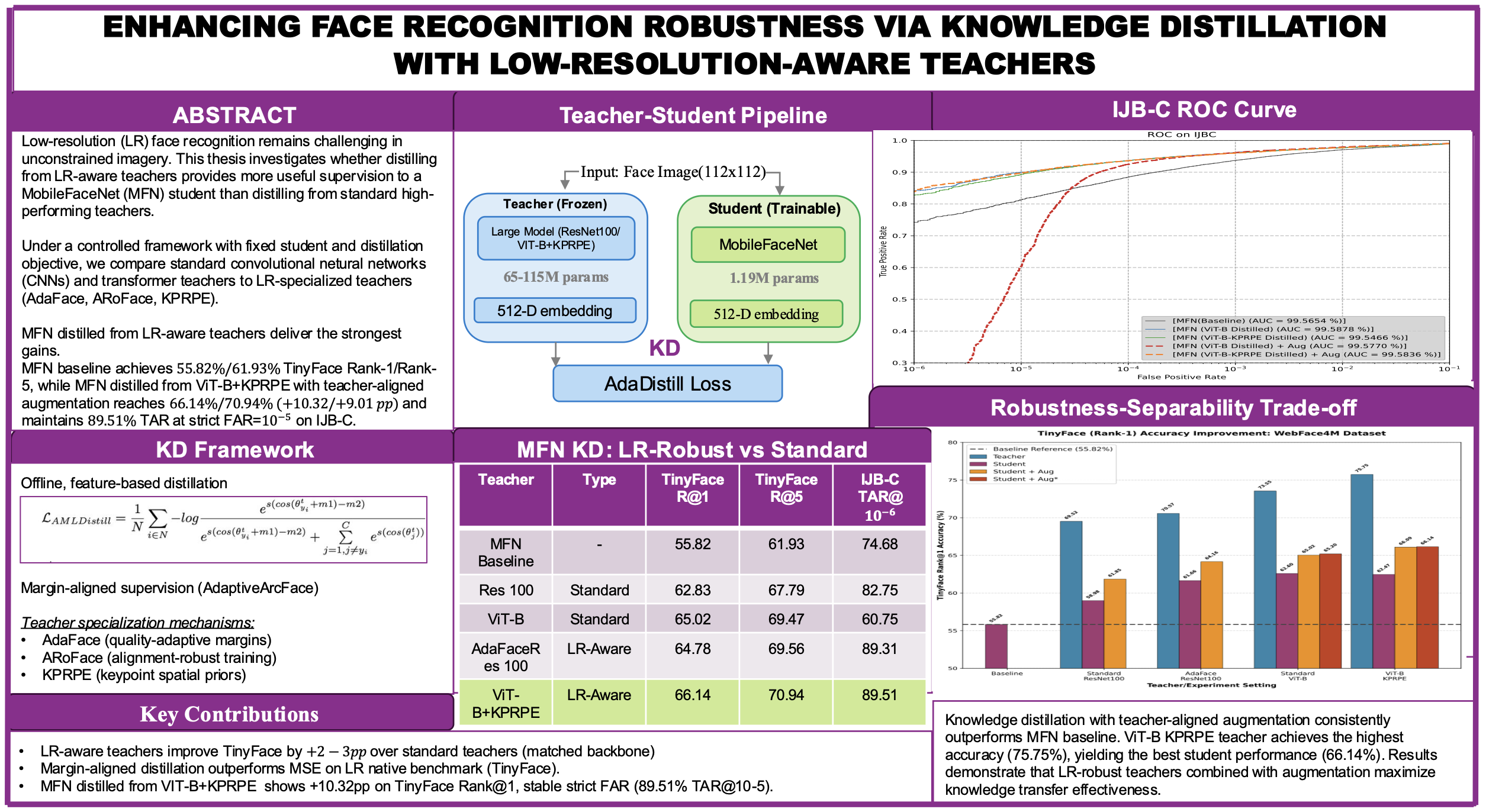
LR-Aware Knowledge Distillation for Face Recognition

Fraunhofer IGD x TU Darmstadt

Aug 2025 - Feb 2026

Repo

How do you make a lightweight face recognition model robust to low-resolution inputs — without sacrificing accuracy? By teaching it from a teacher that has already seen the degradation.

Problem

Standard knowledge distillation transfers representations from large teachers to compact students — but ignores the resolution gap. Real-world deployments such as surveillance, robotics, and edge cameras often serve low-resolution inputs that trained models were never exposed to.

Approach

  • Designed a low-resolution-aware distillation framework: teachers explicitly trained on degraded inputs guide student learning, coupling representation alignment with resolution robustness.
  • Built a reusable PyTorch model zoo with 15+ teacher-student configurations spanning CNNs and Vision Transformers, enabling controlled ablations across backbones, loss functions, and datasets including MS1MV2 and WebFace4M.
  • Implemented full distributed training in PyTorch DDP; benchmarked latency, memory, and accuracy trade-offs for each configuration.

Result

+2.68 ppaccuracy gain on LR benchmarks15+teacher-student configs evaluated1.0thesis grade
PyTorch · DDPKnowledge DistillationCNNs · Vision TransformersFace RecognitionMS1MV2 · WebFace4MModel compressionEdge deployment
2025-2026Thesis

Hackathons & Projects

Things that kept me up at night

A place for project work, hackathon prototypes, experiments, demos, repos, and the small engineering stories that deserve more context than a GitHub card.

ProjectsHackathonsExperiments
personal build

AI Systems

Agent Memory System — Local Claude Code Implementation

Local implementation of the OpenClaw hybrid memory architecture for long-running agent sessions.

Feb 2026

LLM agents lose context across sessions. This is a local implementation of the OpenClaw hybrid memory architecture — studying how production-grade agent memory actually works, then building it from scratch.

  • Hybrid retrieval: BM25 keyword search fused with nomic-embed-text vectors stored in Qdrant, combined via 70/30 weighted union with 400-token overlapping chunk indexing for accurate cross-boundary recall.
  • BAAI/bge-reranker-v2-m3 cross-encoder reranking on fused candidates, jointly encoding query and chunk to surface the most contextually relevant memories, not just nearest neighbours.
  • Pre-compaction flush at configurable soft-token threshold, preserving memory state across long agentic sessions without context overflow.
BM25keywordnomic-embed-textQdrant vectors70/30 fusiontop-K candidatesbge-reranker-v2-m3cross-encoderagent contextfinal output
Python · SQLitenomic-embed-textQdrantBM25 · Hybrid searchbge-reranker-v2-m3Fully local · No API
Feb 2026AI Systems
personal project

3D Computer Vision

3D Object Detection via LiDAR-Camera Fusion on KITTI

Modular sensor-fusion pipeline for reliable 3D scene understanding using camera texture and LiDAR geometry.

Feb to May 2025

Cameras capture texture, and LiDAR captures geometry. This project combines both signals in a modular fusion pipeline and benchmarks where fusion has the most impact.

The engineering problem

  • Designed a modular two-stream pipeline using YOLOv8 for 2D semantic detections from camera images and PointPillars for 3D geometry from LiDAR point clouds. Both streams are aligned in Bird's Eye View projection space for late-stage fusion.
  • Benchmarked early and late fusion strategies across KITTI to quantify the accuracy-complexity trade-off instead of assuming one approach dominates.
  • Built the architecture so detectors, fusion strategy, and evaluation modules can be swapped independently, making the pipeline reusable for research experiments.
+5% mAPover single-modality baseline2 strategiesearly and late fusion comparedKITTIindustry-standard AV benchmark

Applicable toAutonomous vehicles, industrial inspection, robot perception, and domains that need reliable 3D scene understanding.

PointPillars · YOLOv8PyTorch · Open3DBEV projectionSensor fusionModular pipelineKITTI3D object detection
Feb-May 20253D Vision
personal project

Edge AI · MLOps

Privacy-Preserving Object Detection for Industrial Surveillance

On-device safety monitoring with real-time anonymisation and PPE detection for industrial environments.

May to Jun 2024

Safety compliance and privacy are usually in tension on factory floors. This project anonymises people in real time while keeping PPE detection intact, with deployment and benchmarking handled entirely on-device.

  • Fine-tuned YOLOv8-small for person and face detection in industrial environments, then applied real-time Gaussian anonymisation per detection while preserving downstream PPE checks for helmets and vests.
  • Exported the model to ONNX and TensorRT for Jetson Xavier NX deployment, achieving 30+ FPS with latency, GPU utilisation, and memory footprint benchmarking.
30+ FPSreal-time on Xavier NXYOLOv8sTensorRT optimisedon-deviceno cloud, no data egress
YOLOv8-smallONNX · TensorRTJetson Xavier NXReal-time inferenceGaussian anonymisationEdge deploymentPPE compliance
May-Jun 2024Edge AI
🏆 close call · 1st prize

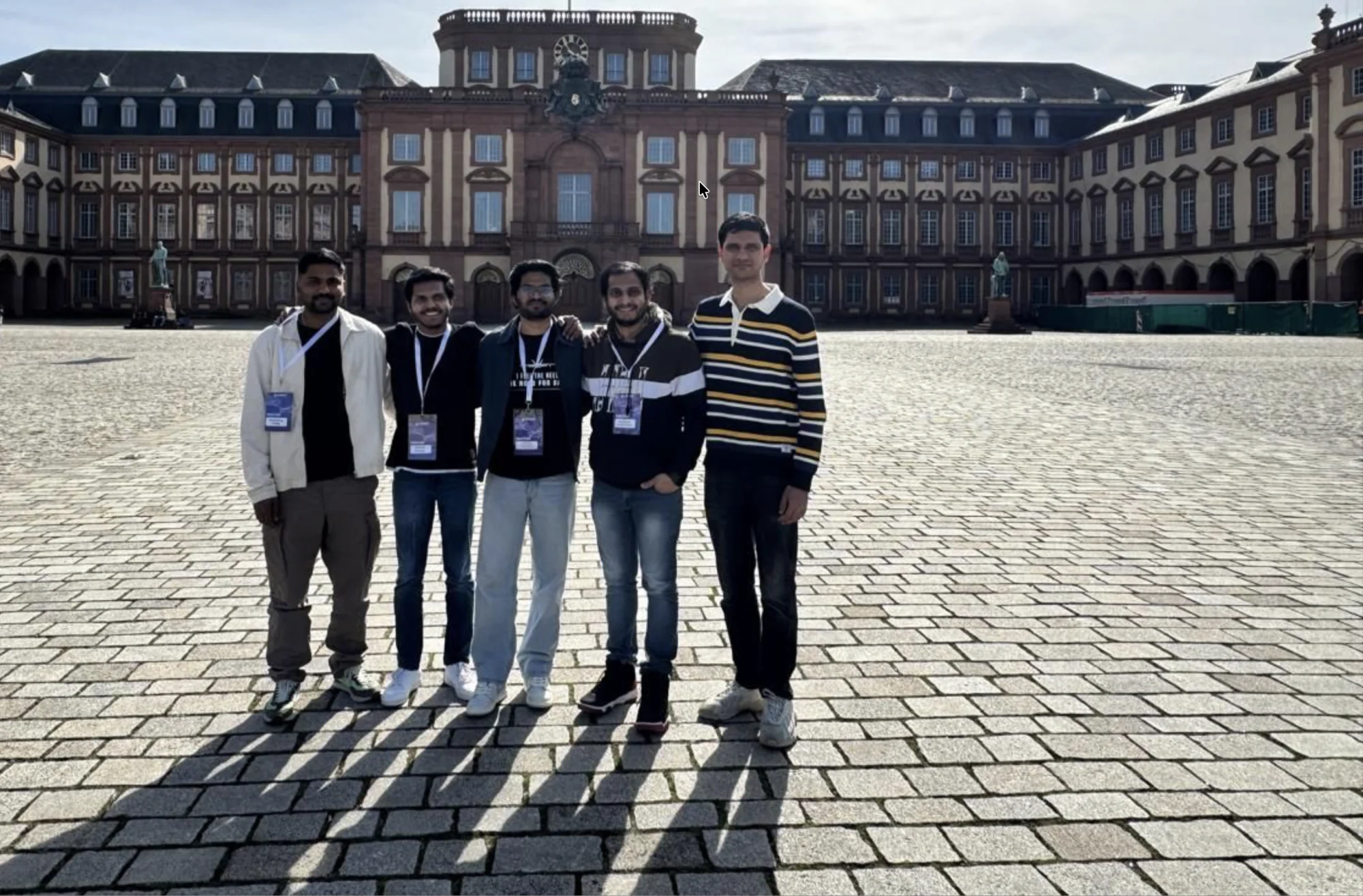
Q-Hack 2026

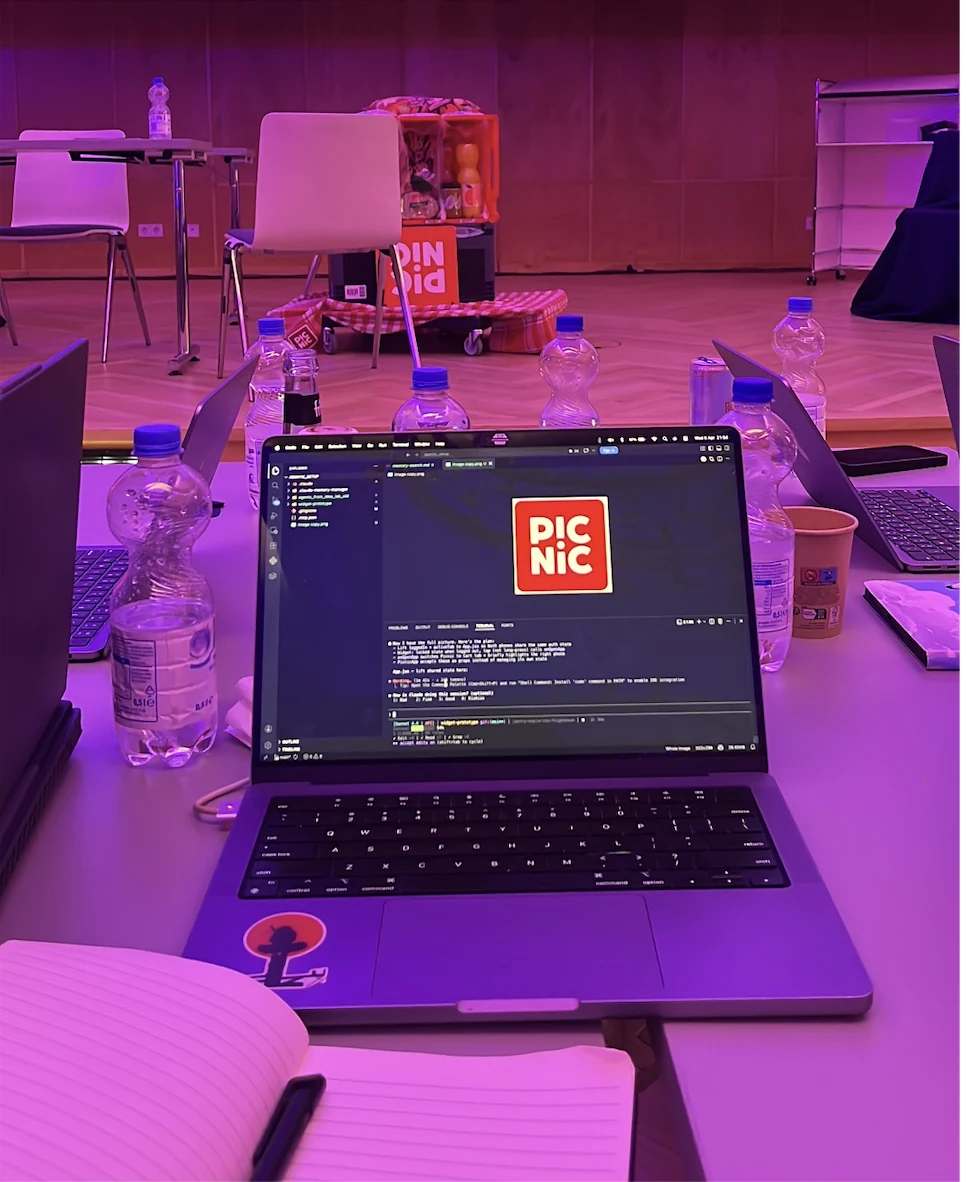
Picnic Hyper-Personalisation: The Grocery App That Thinks Ahead

University of Mannheim hackathon build for household grocery planning and real-time cart collaboration.

Apr 8 to Apr 10, 2026

Most grocery apps remember what you bought. We built one that predicts what a household needs before the app is opened, fills the cart for review, handles missing inventory, and keeps every shopper in sync.
  • Built a smart-cart flow where a recommendation pipeline and Gemini LLM learn purchase history, pre-fill groceries, and still leave the user in control before checkout.
  • Designed an inventory-aware fallback path that finds the closest warehouse-available alternative when an item is out of stock, so the order can continue without manual searching.
  • Implemented a shared-cart experience for partners or housemates, with live cart updates through WebSockets so everyone sees changes in real time.
  • Added an always-on widget for late-night reminders, turning quick text input into the right product and dropping it directly into the cart.
  • Shipped the full hackathon stack with FastAPI, PostgreSQL on Neon, React 19, WebSockets, Zustand, Google Gemini, and recommendation ML.
Python · FastAPIGoogle GeminiRecommendation MLNext.js · WebSocketsReal-time collaborationPostgreSQL · NeonInventory awareness
Apr 8-10 2026Q-Hack
data investigation

DataFest 2026

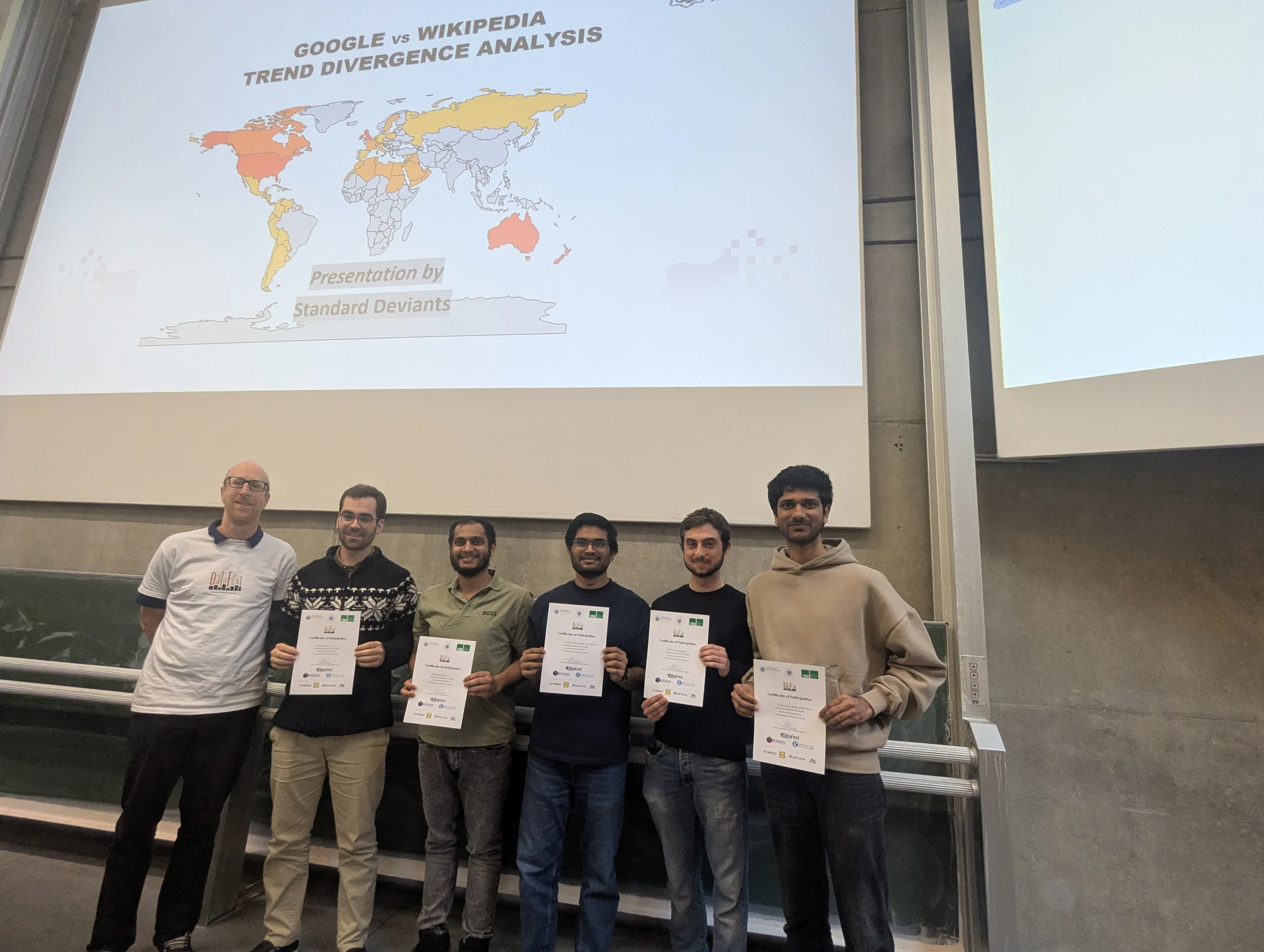
Google vs Wikipedia: Measuring the AI Overviews Signal Gap

Cross-language analysis of how Google AI Overviews align with Wikipedia traffic signals.

Mar 2026

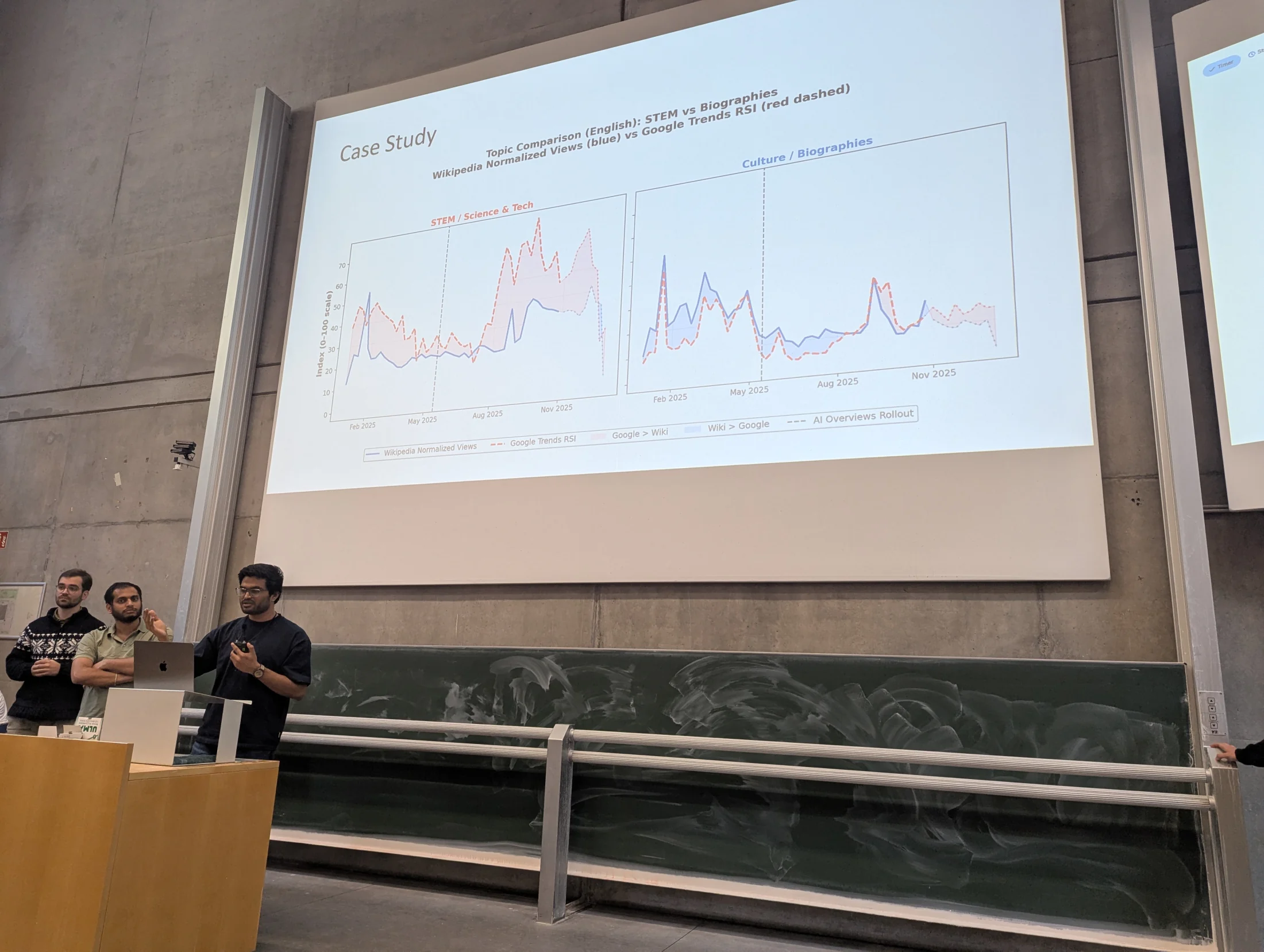
Everyone said AI Overviews would kill Wikipedia traffic. We measured the signal directly across 10 language editions, 100 articles per edition, and windows before and after the May 2025 rollout.

  • Built a cross-language data pipeline combining SerpAPI search visibility with Wikimedia Analytics traffic data for repeatable article-level comparisons.
  • Normalised Google Trends and Wikipedia pageview signals so topic categories and language editions could be compared on the same scale.
  • Found a +22.6 point divergence for STEM topics, showing stronger separation between Google and Wikipedia attention after AI Overviews.
  • Found near-zero divergence for culture and biography topics, suggesting the AI Overview effect depends heavily on search intent and subject matter.
  • Shipped the investigation with Python, Polars, Plotly, Jupyter, and a reproducible cross-language analysis workflow.
Python · PolarsSerpAPI · Wikimedia AnalyticsPlotly · JupyterCross-language data pipelineAI Overview analysis
Mar 2026DataFest

GitHub

Code, commits, and context

Navi keeps walking until you ask something. Send a question and Navi checks with Lexi, the repo-savvy twin who reads my GitHub and brings back the answer.

Repo-only questions

Contact

Fork me a message

Use the form below, send a message to sumanth.rc@icloud.com, or write me on LinkedIn or GitHub.